


UFLI and the Path to Stronger Literacy
At XLIS, we believe reading is the foundation for success — both in school and in life. With the right support, every child can become a confident reader. Because literacy is so closely connected to future learning, helping children learn to read is one of the most important parts of our mission as educators.
This year, we have introduced UFLI Foundations, a research-based program developed by the University of Florida Literacy Institute, to strengthen reading skills across our classrooms. From P1 to P4, every class is implementing UFLI, and in the upper primary grades, the program is also used to support students who need to reinforce foundational skills.
The program’s structured, step-by-step approach helps students overcome the challenges of learning to read and write in English, supports progress on international benchmarks such as MAP Reading and Language Usage assessments, and nurtures a lifelong love of reading and writing (University of Florida Literacy Institute, 2022).
What is UFLI?
Key Benefits
· Step-by-step lessons that make reading and spelling manageable
· Multisensory approach to support diverse learners, including English language learners
· Builds confidence and motivation to read independently
· Strengthens literacy skills across the curriculum and assessments
· Encourages a lifelong love of reading and writing
Whitney, PYP EAL Teacher:“I enjoy teaching with UFLI because the encoding and decoding practice through auditory drills really helps my students. The materials provided make it easy to support their learning every day.”
Mason, P2 Student:“It is fun because I learn the sounds of letters and how to spell words. I learn to segment words.”
For English Learners, UFLI is Especially Effective
At XLIS, many of our students are learning English as an additional language. UFLI’s step-by-step lessons help them pick up new patterns without feeling overwhelmed. Experiencing quick success in decoding words boosts both their motivation and confidence. As they become more familiar with English spelling and sound patterns, they also strengthen their vocabulary, listening, speaking, and writing skills.
Kevin O’Shea, PYP EAL Teacher:“I like using UFLI with my students. The visual drills and consistent techniques across all primary classes, combined with motions and language, make learning engaging and effective.”
This approach ensures that all students, no matter their language background, can access the same systematic and engaging instruction (Foorman & Torgesen, 2001).
Nina, P4:“UFLI helped me read more difficult words, and it is fun to learn strategies from the toolbox and learn the heart words.”
What UFLI Looks Like in Our Classrooms
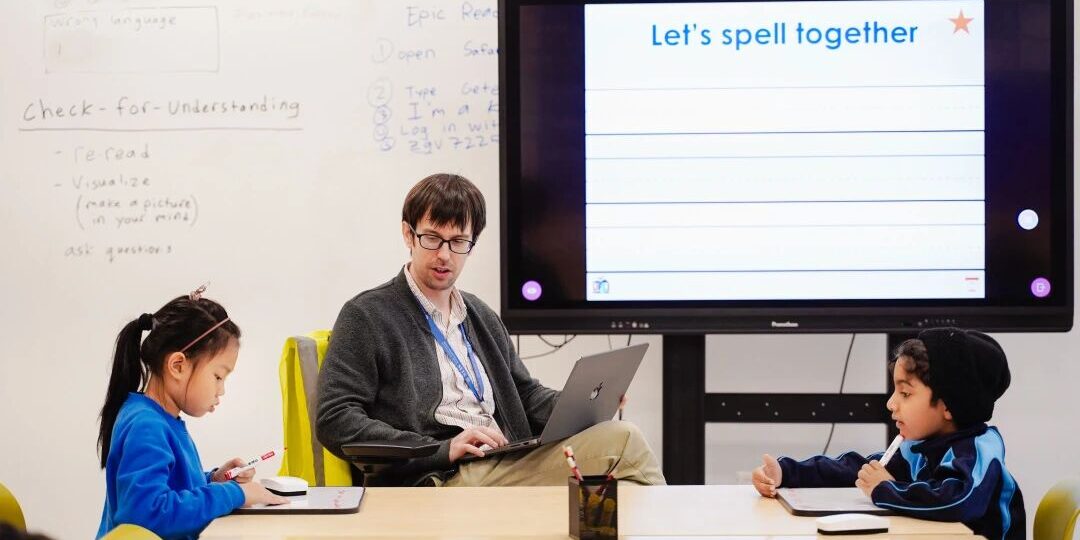
At XLIS, UFLI lessons are short, focused, and interactive, helping students build reading skills step by step. Classrooms are engaging spaces with vowel valley displays, word walls, heart word lists, whiteboards and markers, partner reading, and roll and read activities, all designed to support students as they explore the foundations of literacy.
Students start by exploring phonics patterns through slide decks, blending drills, and spelling activities. They then practice decoding words, reading sentences, and applying these skills in connected texts, which they often illustrate to deepen comprehension and make learning visible. During carpet or table time, students share their sentences with the class, learning from one another.
UFLI lessons are multisensory — students see, hear, say, and write as they learn — and frequent review encourages knowledge to be reinforced and retained (University of Florida Literacy Institute, 2022). Lessons also include interactive partner games, like Roll and Read, which make practicing word patterns fun while promoting collaboration and friendly competition.
Mr Daniel, P4 PYP Teacher:“ The lessons are fast-paced and engaging while also making it very easy for the teacher to check for understanding and adjust the lessons in real time as needed. When students are reading or writing and are having difficulty with a word, they have a variety of tools to rely on to help them figure it out. ”
Mr. Pejay, P2 PYP Teacher, explains:“My students are really engaged with the program. They enjoy segmenting words and I love seeing them sound out words when they’re unsure, and they are transferring these skills across their learning.”
Student Voices:
Mike, P4:“The word work activities are fun, and we like using the whiteboards and markers to record our thinking.”
Yoyo, P4:“The word chains require us to use our listening skills to hear the sounds and know the letters (and letter combinations) that make those sounds so we can spell correctly.”
Through these routines, students gain confidence and independence in reading and writing, while practicing skills that help them tackle more complex texts, students see themselves as capable readers and writers.
UFLI in the PYP Classroom
As a PYP school, XLIS develops the whole child through inquiry, agency, and concept-driven learning (International Baccalaureate, 2018). Strong literacy skills are essential for students to fully participate in inquiry and communicate their ideas with confidence — and UFLI directly supports this goal.
Students gain decoding strategies and take ownership of their reading, which empowers them to pursue inquiry with confidence. Fluent reading enables them to research, ask questions, and explore across subjects — from science texts to social studies.
Ms. Nicola, PYP Coordinator:“In the PYP, inquiry drives so much of what we do. UFLI gives our students the literacy tools they need to access information, ask deeper questions, and share their thinking.”
Mr. PeJay P2 PYP Teacher:“This program gives them (students) the confidence to tackle challenging words found in their units of inquiry. They build strategies to read with independence.”
Student Voices:
Albert, P4:“We learn many skills that help us be better readers and writers. UFLI makes me self-reflect and be independent”
P3 Student:“UFLI helps us make connections with letters and sounds and be risk-takers when reading and writing hard words.”
Looking Ahead: Literacy Growth at XLIS
Research shows that UFLI Foundations has a clear impact on reading development: students read fluently, approach texts with curiosity, and celebrate their successes (University of Florida Literacy Institute, 2022). While we are just beginning our UFLI journey at XLIS, this evidence gives us confidence in the growth potential for every student.
Daniel, PYP P4 Teacher: “Since I started using the UFLI phonics lessons last year I have seen clear progress in every student’s ability to decode and encode words using recognizable patterns. I think this program provide lots of long-term benefits for all the students involved.”
By combining evidence-based instruction with ongoing MAP assessments, we track progress, provide targeted support, and celebrate growth.
Families are essential partners in this journey. Encouraging practice at home, reading together, and celebrating small successes reinforces classroom learning and strengthens confidence.
With strong instruction at school and encouragement from families at home, XLIS students are on the path to becoming lifelong readers.
Bibliography
Ehri, L. C. (2020). The science of learning to read words: A case for systematic phonics instruction. Reading Research Quarterly, 55(S1), S45–S60.
Foorman, B. R., & Torgesen, J. K. (2001). Critical elements of classroom and small-group instruction promote reading success in all children. Learning Disabilities Research & Practice, 16(4), 203–212.
International Baccalaureate. (2018). PYP: From Principles into Practice. International Baccalaureate Organization.
National Reading Panel. (2000). Teaching children to read: An evidence-based assessment of the scientific research literature on reading and its implications for reading instruction. Washington, DC: National Institute of Child Health and Human Development.
University of Florida Literacy Institute (UFLI). (2022). UFLI Foundations: An explicit and systematic phonics program. Gainesville, FL: University of Florida.
Click here for more details.
Author:
Nicola Crossfield (PYP Coordinator )