





Dear XLIS Parents,
Good morning.
Last week, we were privileged to host Mr. Yi Wang, Executive Director of the Harvard Center Shanghai, for our parent workshop, Education and Jobs in the Age of AI. His thoughtful framing of the shifting world of work and learning has stayed with me, and I would like to share some reflections with you today, as we partner together on the most important work we do: raising our children.
Much of the public conversation around AI centers on test scores, credentials, and the race to stack more courses, certificates and extracurricular credits onto our children’s schedules. We see families investing tremendous time and resources in supplementary classes, aiming to help their children stay competitive. Yet what Mr. Wang shared, reinforced by leading voices from the technology sector, is a clear reminder: AI can master knowledge, complete repetitive tasks, and even generate polished answers. What AI cannot replicate is the full human being.
Dario Amodei, CEO of Anthropic, noted in 2025 that large numbers of routine, variable tasks in law, consulting, finance and administration are at risk of automation within the next one to five years. Palantir has publicly observed that the traditional college pathway is no longer a reliable training ground for every career, and has begun hiring high school graduates directly. At the same time, data from the AIDE Institute shows that most newly created AI-related jobs are concentrated at senior levels; entry-level openings for young graduates remain limited. This means the old formula — strong grades plus a long list of classes — no longer guarantees opportunity. The marketplace is changing faster than our curriculum plans can keep pace.
This does not mean academic rigor is unimportant. It means we must redefine what “success” looks like.
Mr. Wang shared that Harvard University does not seek perfect, high-scoring applicants above all else. Admissions teams look for students with growth potential, inner motivation, genuine interests, and a capacity to contribute to community. They seek young people with direction, grit, curiosity, and the courage to pursue what they care about — students who are willing to explore, experiment, and reimagine their path, not only students who follow a preset checklist. Many of the alumni stories he showed us reflected this truth: students changed majors, followed their passions across different fields, and built careers that did not directly match their university degree. US and Chinese labor data both confirm that a large majority of adults eventually work in fields unrelated to their undergraduate major.
This aligns closely with the World Economic Forum’s 2025 Future of Jobs Report, which outlined eight core human capacities that will matter most in the coming years: analytical thinking, resilience and agility, leadership and social influence, creative thinking, motivation and self-awareness, technological literacy, empathy and active listening, and curiosity for lifelong learning. Notice that exam proficiency is not on this list. These are human qualities. They are the skills that turn knowledge into purpose, and separate a capable learner from a machine that can produce correct responses.
Empathy, in particular, deserves our attention. It is the ability to listen deeply, to understand peers and teachers with different backgrounds, perspectives and strengths, and to hold space for others. This is not a “soft” extra skill. It is foundational to collaboration, leadership, and meaningful service. A child who can score highly on every assessment but cannot connect with, respect, or care for the people around them will struggle to thrive in community, no matter how impressive their transcript is.
At XLIS, we design our programmes intentionally to build these human capacities, not only academic knowledge.
Last Friday, our primary school warmly observed World Kindness Day, offering a beautiful example of human warmth that artificial intelligence can never simulate. Our youngest ECE learners presented flowers to our campus ayis, sincerely expressing gratitude for their daily care and dedication. Meanwhile, all Primary students received Kindness Challenge Cards, encouraging them to practice intentional acts of kindness not merely for one celebration day, but as a lifelong daily habit. These simple yet heartfelt moments nurture authentic human connection, gratitude, and relational warmth — irreplaceable human strengths that no algorithm or AI technology can ever replicate.
Our Grade 7 and 8 boarding challenge is built on one simple, powerful goal: helping students learn to take responsibility for themselves. When they manage their routines, their shared spaces, and their daily choices without constant adult direction, they build self-awareness, resilience and accountability. Soon, our Grade 9 and 10 students will begin career exploration experiences, creating direct, tangible connections between classroom learning and the real world.
We also recently closed our Week Without Walls, where students explored nature, design thinking, and service learning. These experiences push students outside textbooks, invite them to solve messy, open-ended problems, and practice care for people and the planet. These are not “breaks” from learning. They are the heart of learning that builds character, agency and a sense of responsibility beyond the classroom walls.
None of this means we dismiss academics. We hold high standards for our students, and we guide them to master content, think critically, and grow intellectually. But we refuse to reduce our children to learning machines. They are not output devices for grades, awards or university offers. They are whole people: curious, emotional, imperfect, creative, and capable of care.
Passion, as Mr. Wang put it, is our best insurance against disengagement. If young people have no internal drive, no thing that gets them out of bed each day, all the tutoring and advanced courses in the world cannot sustain them when the job market shifts, when plans change, when success does not arrive as expected. Our job as educators and parents is to protect that inner spark, to create space for exploration, and to resist the pressure to fill every hour with structured training.
We are preparing our students for a future we cannot fully predict. The best preparation we can offer is not a fixed set of facts, but a strong inner foundation: values, transferable skills, empathy, resilience, and a clear sense of purpose. We want our graduates to be rooted in their identity, open to the world, able to adapt, and committed to contributing to something larger than themselves.
Before we close, I invite you to pause and reflect on two gentle questions:
- What inner passion and qualities am I helping my child nurture, beyond grades and courses?
- Am I making space for my child to learn responsibility, empathy and curiosity, rather than only filling their schedule?
Thank you for partnering with us in this work. It is a privilege to walk alongside your children, and alongside you, as we nurture thoughtful, compassionate, purpose-driven young people for this AI era.
Please reach out anytime if you would like to discuss these ideas further.
Warm regards,
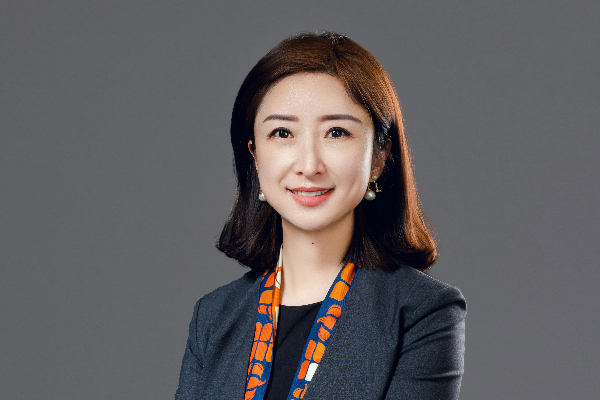
Lily Liu
Head of XLIS
Email: lily.liu@xalis.com
