


From Brain to Classroom: An International Dialogue on Mental Health and the Warmth of Education
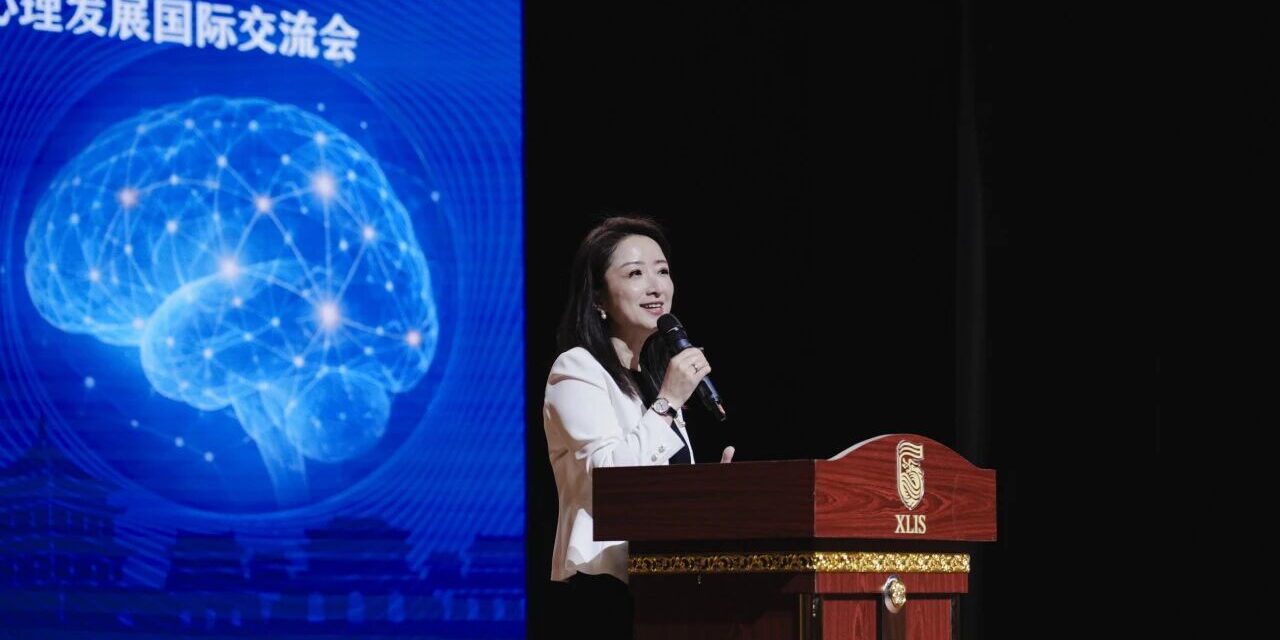
As the host of this conference, Dr. Liu , the Head of XLIS, emphasized in her opening remarks the complementary and mutually reinforcing roles of nature and nurture in supporting children’s healthy psychological development. She pointed out that children’s psychological development is influenced by their innate endowments and, even more importantly, cannot be separated from the nourishment and shaping of the acquired environment. Drawing on years of practical exploration in teaching management as well as advanced experience accumulated through international visits and exchanges, Principal Liu shared how cutting-edge concepts from brain science and positive psychology can be integrated into the school’s daily educational work, creating a more scientific and warm psychological support environment for children. She stated that Xi’an Liangjiatan International School has long been deeply engaged in student psychological support and child protection practices in cross-cultural contexts, and expressed the hope of taking this conference as an opportunity to exchange and learn from colleagues, jointly promoting the professional and international development of mental health education in primary and secondary schools.
Seeing the Issue:
7–12 Students per Class in the “Gray Zone” of Emotions
Associate Professor Chi Xinli from Shenzhen University, in her keynote “From Brain to Classroom,” revealed that the detection rate of depressive symptoms among Chinese adolescents is as high as 15%–25%. In a class of 50, approximately 7–12 students may be experiencing depressive symptoms—yet most never seek counseling. She emphasized that teachers are among the few adults who can observe children long-term and naturally. Everyday signals—declining homework, distraction, peer conflict—often appear earlier than any scale score. Every response determines whether these signals are caught or missed.
From the Brain:
Emotions Are Not an Attitude Problem—They Are a Developmental Reality
From Research to Classroom:
What Schools Can Do?
Two counselors from our school shared frontline practices. Michelle Taylor, a licensed professional counselor, noted in “The Cost of Asking for Help” that having resources does not mean students are willing to seek help. Campus culture, confidentiality, and labeling risks all become barriers. She urged schools to reflect: Are counseling offices too conspicuous? Are students publicly pulled from class? Is seeking help equated with “having a mental problem”?
Every Child Who Is Seen Gains One More Chance to Be Caught
This conference—from brain science mechanisms to help-seeking culture, to support strategies for neurodivergent learners—combined theory with practice, offering diverse perspectives for school mental health. Looking ahead, we will continue to strive tirelessly—turning neuroscience evidence into the warmth of the classroom, writing the principles of psychological safety into the details of institutional practice, and transforming “Every child who is seen gains one more chance to be caught.” from a moving phrase into a lived reality of everyday education. Because the ultimate mission of education has never been merely to produce outstanding individuals, but to protect whole human beings.
Click here for more details.
Author:
Fancy Fan (Admin Officer)